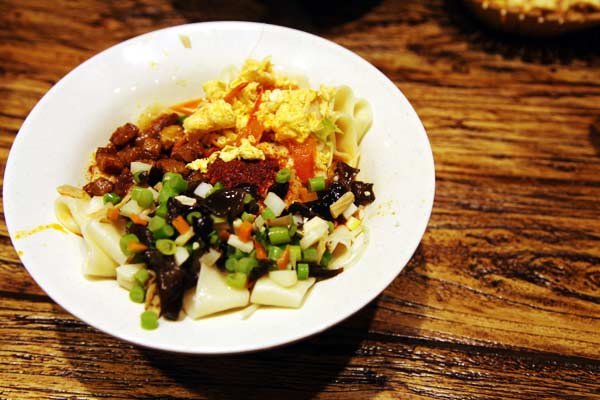
Biang Biang Noodle
Introduction
Biang biang noodles are a traditional Chinese dish originating from Xi'an, the capital of Shaanxi province. Known for their distinctive width and chewy texture, these noodles are a staple of Xi'an cuisine, which has been influenced by the ancient Silk Road and its plethora of cultures. Biang biang noodles are typically served dry with a variety of toppings, including stewed pork belly and chili oil, creating a delicious combination of flavors that reflect the rich culinary heritage of the region. What sets biang biang noodles apart from other noodle dishes is not only their unique taste but also the complex character used to write the word "biang," which is so intricate that many native Chinese speakers find it difficult to remember.
History
The history of biang biang noodles is deeply intertwined with the cultural and culinary development of Xi'an, which was an important hub on the Silk Road. This historic trade route facilitated the exchange of goods, ideas, and culinary traditions between the East and the West, introducing new ingredients and cooking techniques to Xi'an. The city has a long tradition of wheat cultivation, allowing it to become a center of diverse flour-based dishes. Over time, biang biang noodles emerged as a popular local dish, becoming a symbol of regional identity and representing the convergence of various cultural influences. While the exact origin of biang biang noodles is difficult to trace, their continuous popularity in Xi'an demonstrates their cultural significance and enduring appeal.
Etymology
The name "biang biang noodles" is derived from the sound produced when chefs slap the wide and thick noodle dough against the counter as they stretch it. This onomatopoeic character "biang" is notoriously complex, consisting of numerous strokes that make it one of the most difficult Chinese characters to write. This complexity adds an additional layer of intrigue and mystique to the dish, making it a topic of fascination for both locals and tourists. Interestingly, the character "biang" is not found in standard Chinese dictionaries, and its etymology is rooted in folklore and wordplay, contributing to the cultural mystique surrounding the noodles.
Preparation and Ingredients
Dough Preparation
The preparation of biang biang noodles begins with the dough, which is made from simple ingredients: wheat flour, water, and a pinch of salt. The dough is kneaded until it achieves a smooth and elastic texture, and then it is left to rest. This resting period allows the gluten to develop, which contributes to the noodles' characteristic chewiness. After resting, the dough is divided into smaller portions, which are then rolled into long strips.
Noodle Formation
The formation of the noodles is a critical step in the preparation process. Each strip of dough is stretched by hand, a technique that requires skill and precision. As the dough is pulled and slapped against the counter, it gradually elongates and widens, becoming the signature belt-like noodle. This process not only shapes the noodle but also enhances its texture, resulting in a chewy, substantial noodle that is a hallmark of the dish.
Sauce and Toppings
Once the noodles are formed, they are cooked in boiling water until they reach the desired consistency. The cooked noodles are then served with a variety of toppings and sauces that reflect the rich flavors of Shaanxi cuisine. Common toppings include stewed pork belly, which offers a mix of fatty and lean meat, creating a savory and satisfying dish. The noodles are also tossed with chili oil, garlic, vinegar, and soy sauce, adding layers of spicy and tangy flavors. Additionally, fresh vegetables such as scallions and cilantro may be added for a burst of freshness and color.
Cultural Significance
Biang biang noodles hold significant cultural value in Xi'an and throughout Shaanxi province. As a representation of the region's culinary identity, these noodles are more than just a meal; they are a symbol of Xi'an's rich history and its role as a cultural crossroads. The unique character "biang" and the traditional method of noodle-making serve as a testament to the area's enduring culinary traditions. Furthermore, biang biang noodles are often associated with family gatherings and communal dining, reflecting the social aspect of food in Chinese culture. The dish's popularity and adaptability have allowed it to transcend regional boundaries, gaining recognition and appreciation across China and beyond.
Regional Variations
While biang biang noodles originate from Xi'an, regional variations of the dish can be found throughout Shaanxi province and in other parts of China. These variations often incorporate local ingredients and flavor profiles, resulting in distinct interpretations of the classic dish. In some areas, the noodles may be served with a different protein, such as beef or lamb, reflecting local culinary preferences. Additionally, variations in the sauce, such as increased garlic or a different type of chili, can offer a unique twist on the traditional recipe. These regional variations highlight the versatility of biang biang noodles and their ability to adapt to different culinary contexts while maintaining their core characteristics.
Biang Character
The "biang" character is an integral part of the biang biang noodle experience. Known for its complexity, the character is composed of numerous strokes, making it a challenge to write and remember. Its origins are steeped in lore, with various stories and interpretations contributing to its enigmatic status. The character is not officially recognized in standard Chinese dictionaries, adding to its mystique and cultural cachet. Despite these challenges, or perhaps because of them, the "biang" character has become a symbol of cultural pride and identity for the people of Xi'an and Shaanxi province. It serves as a reminder of the rich history and unique traditions that define the region.
Popularity and Promotion
In recent years, biang biang noodles have gained popularity beyond Xi'an and Shaanxi province, becoming a beloved dish in various parts of China and attracting international interest. This rise in popularity is due in part to the dish's distinctive taste and texture, as well as the cultural intrigue surrounding the "biang" character. Restaurants specializing in Shaanxi cuisine have played a crucial role in promoting biang biang noodles, showcasing their unique preparation methods and flavors to broader audiences. Additionally, the growth of food tourism and cultural exchange has helped introduce biang biang noodles to new markets, further solidifying their status as a signature dish of Chinese cuisine.
See Also
-
Roujiamo (Chinese Meat Burger)
-
Yangrou Paomo (Pita Bread Soaked in Lamb Soup)
-
Liangpi (Cold Noodles)
-
Youpo Mian (Oil-Sprayed Noodles)
References
-
Xi'an's Influence on the Noodle Culture via the Silk Road.
-
Shaanxi Provincial Traditions and Noodle Variations.
-
The Onomatopoeic Origin of "Biang" in Chinese Culinary Lore.
-
Biang Biang Noodles: A Culinary Symbol of Xi'an.
-
Exploring Regional Variations of Biang Biang Noodles.
External Links
-
The Culinary Heritage of Xi'an: A Digital Tour.
-
The Art of Noodle Making in Shaanxi Province.
-
Discover the Mystique of the Biang Character.
-
A Global Journey of Biang Biang Noodles.








